
CREDAI
environmental impact
ESG
green-certified buildings
IGBC
Indian Green Building Council
Sustainability
India’s Real Estate Sector Embraces Sustainability with Surge in Green-Certified Buildings
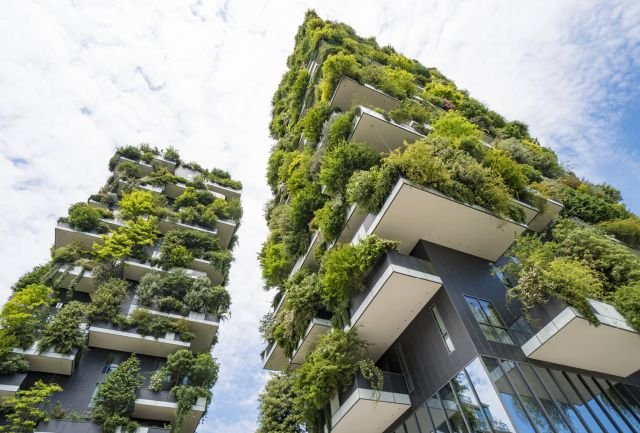
India’s real estate sector is undergoing a significant transformation towards sustainability, with green-certified buildings becoming increasingly common. A joint report by CREDAI and Colliers, titled “Sustainability in Real Estate: Towards a Greener Skyline,” reveals that approximately 66% of Grade A office spaces in the top six Indian cities are now green-certified, totaling around 503 million square feet as of 2024. This figure is expected to rise substantially in the coming years.
The shift towards green buildings is driven by tenant preferences for energy efficiency, lower operational costs, and regulatory compliance. Over the next two to three years, the inventory of green-certified office spaces is projected to grow to nearly 700 million square feet, with nearly 80-85% of upcoming office leasing anticipated to occur in green buildings.
Shekhar G. Patel, President of CREDAI, stated, “The real estate sector continues to play a defining role in driving India’s transition towards a sustainable, low-carbon future. With green-certified buildings now accounting for a significant share of new developments, it’s evident that sustainability is becoming a core pillar of real estate strategy across asset classes.”
The adoption of green building practices has nearly doubled over the past five years, with the total certified footprint reaching 13 billion square feet by 2024, according to the Indian Green Building Council (IGBC). This includes over 2 million certified residential units, 6,500 commercial projects, and 750 industrial buildings.
The trend is particularly pronounced in the office sector, where green buildings not only outperform in occupancy and rental metrics but are also rapidly becoming the industry standard. In 2024, green-certified office buildings achieved average occupancy levels between 80-90%, compared to 65-85% for non-certified counterparts. These green buildings also commanded a rental premium, with increases of up to 24% in Mumbai, followed by 16% in Chennai and 14% in Hyderabad.
Badal Yagnik, CEO of Colliers India, noted, “Leasing in green-certified buildings surged annually by 20% in 2024. Looking ahead, the proportion of leasing in green-certified buildings is expected to rise from approximately 75% currently to about 80-85% in the next few years, underscoring the continued shift towards sustainable real estate development in the office market.”
Among cities, Bengaluru leads with 158.2 million square feet of green-certified stock, representing 73% of its Grade A inventory, followed by Delhi NCR with 93.8 million square feet and Hyderabad with 86.7 million square feet. Notably, Hyderabad boasts the highest penetration rate of green-certified buildings within its Grade A stock at 75%.
Beyond new construction, retrofitting aging office infrastructure presents a significant opportunity. An estimated 355-385 million square feet of office space older than 10 years could be upgraded for improved sustainability, representing a potential investment opportunity exceeding ₹425 billion. Additionally, 80-110 million square feet of newer buildings (less than 10 years old) could be upgraded with relatively lower capital expenditure, unlocking value with 3-4 times returns over the asset’s life.
Yagnik added, “Sustainability has become a strategic priority for India’s real estate stakeholders. Developers, investors, and end-users are increasingly aligning their decisions with environmentally responsible practices, recognizing the long-term benefits of energy efficiency, reduced operational costs, and improved quality of life.”
The movement towards sustainability is not limited to commercial real estate. The CREDAI-Colliers report highlights increasing adoption of sustainable practices across other asset classes, including data centers, hospitality, healthcare, and retail. Data centers, known for their high energy consumption, are being designed with renewable energy integration and enhanced power and water efficiencies.
Vimal Nadar, Senior Director & Head of Research at Colliers India, stated, “Green building adoption is no longer confined to core real estate segments alone; it is rapidly expanding into multiple asset classes. With data center capacity projected to exceed 3,500 MW in the next 3-5 years, sustainability will be key in limiting environmental impact.”
As India progresses on its net-zero path, the report calls for stronger policy frameworks, streamlined environmental clearances, tax incentives for green projects, and robust ESG compliance. The increasing proportion of green assets in REITs also indicates growing investor interest in sustainable developments. With developers, occupiers, and investors aligning with climate goals and supportive policy frameworks, India’s real estate sector is poised to make sustainability a mainstream, value-generating strategy for years to come.
Knowledge Source : https://economictimes.indiatimes.com/industry/services/property-/-cstruction/indias-real-estate-turns-greener/articleshow/120407877.cms